
If your garage door doesn't reverse the instant it touches a shoe, a toy, or a tail, it is not safe to operate around children or pets. That's the rule of thumb. The exceptions are narrow: a handful of older doors never had auto-reverse to begin with, and even a door that passes every safety test still needs a family to follow basic habits, because no sensor stops a kid from pressing a remote at the wrong moment.
What Actually Goes Wrong
Garage doors don't fail safely very often, but when they do, it's almost always one of a few specific scenarios:
- The door closes on someone or something that isn't visible to the sensors. A toddler lying down, a dog lying in the doorway, or a low toy can sit below or outside the beam of the photo-eye sensors, which are usually mounted four to six inches off the ground.
- The auto-reverse feature doesn't engage. This is supposed to stop and reverse the door the instant it meets resistance. If the force settings are off, or the sensors are misaligned, the door keeps closing instead of bouncing back.
- A child operates the door unsupervised. Wall-mounted buttons at kid height, a garage remote left in a cup holder, or an opener app on an unlocked phone all make it easy for a young child to trigger the door without realizing someone is underneath.
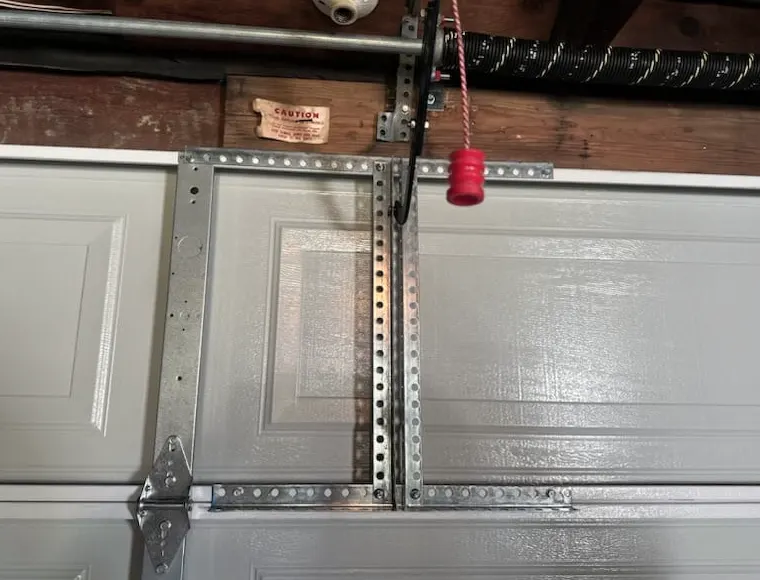
- Fingers get caught in the panel sections or tracks. This is the most common injury, and it happens during normal opening and closing, not just malfunctions. Standard raised-panel doors have pinch points between each section.
- A pet's tail, paw, or leash gets caught at the bottom seal. Pets often linger at the threshold as the door is closing, and a leash dragging under a closing door can pull a dog along with it.
How Bad It Gets
These aren't hypothetical worst-case scenarios; they're the documented injury patterns tracked by consumer safety organizations for decades. The most frequent injuries are crushed or amputated fingers from pinch points between door panels. More severe but less common are cases where a malfunctioning door closes fully on a child or pet, causing broken bones, rib injuries, or worse, because a standard garage door section can weigh well over 100 pounds and older doors can weigh considerably more. Pets tend to suffer paw fractures, tail injuries, or strangulation injuries if a leash or collar catches on a closing door. None of this requires a dramatic equipment failure — it usually just requires a sensor that's slightly out of alignment or a family member who didn't realize someone was standing in the doorway.
The Fixes That Actually Prevent It
Most of this is preventable with a few concrete habits and a couple of five-minute tests you can run yourself:
- Test the auto-reverse monthly. Place a roll of paper towels or a 2x4 flat on the ground where the door closes. Close the door. It should reverse immediately on contact. If it doesn't, stop using the opener until it's serviced.
- Check the photo-eye sensors. They should sit a few inches off the floor, face each other directly, and both show a solid light (usually green) when aligned. Wipe the lenses clean — dust, pollen, and the condensation that builds up in humid garages here can block the beam enough to cause false readings.
- Keep remotes and wall controls out of reach. Store garage remotes in a drawer or on a high hook, not in a car cup holder. Wall-mounted buttons should be at least five feet up, and the backlit button ones are easy for a curious child to find and press.
- Never let kids or pets play near a moving door. It sounds obvious, but driveway games, pets chasing a ball, and kids racing to beat the door closing are how most close calls happen.
- Replace older panel-style doors with pinch-resistant designs if you have small children. Newer panels are shaped so fingers can't get caught between sections the way they can on older doors.
- Supervise leashed pets near the garage entirely. Unclip the leash before walking a dog through a garage doorway, or wait until the door is fully open or closed before bringing a pet through.
Why Humidity and Storm Season Make This Worse Here
Gulf County's climate adds a few wrinkles that homeowners elsewhere don't deal with as much. Humidity and salt air corrode the metal brackets that hold photo-eye sensors in place, and swelling door panels from moisture can throw off the alignment that auto-reverse depends on. A door that reversed reliably in the spring can develop a blind spot by late summer if the sensors have shifted even slightly. Afternoon downpours also push more outdoor play into the garage, which means kids and pets end up near the door and the opener controls more often during the wetter months. And during hurricane season, families sometimes leave the door open for ventilation or to move supplies in and out quickly, which is exactly when a child or pet is most likely to be near it unsupervised. A quick sensor check before and after storm season isn't overkill — it's the difference between a door that still protects your family and one that just looks like it does.
When to Call St. Joseph Garage Door
If your auto-reverse test fails, if the sensors won't hold alignment, or if the door feels heavier or slower than it used to, don't keep using it around kids or pets while you wait and see. Our Garage Door Tune-Up & Maintenance service checks sensor alignment, force settings, and auto-reverse function as a baseline, and catches the corrosion or swelling issues common in this climate before they turn into a failed safety feature. If springs or cables are worn — which changes how a door moves and can affect reverse timing — our Garage Door Spring Repair and Garage Door Cable Repair services get those components back to spec rather than just patching the symptom.
If you're a household with kids or pets in St. Joseph, Port St. Joe, Wewahitchka, Mexico Beach, Apalachicola, Beacon Hill, White City, or Overstreet, call St. Joseph Garage Door for a safety check before it becomes a safety incident. We show up, test it properly, and tell you straight whether it's fine or needs fixing.